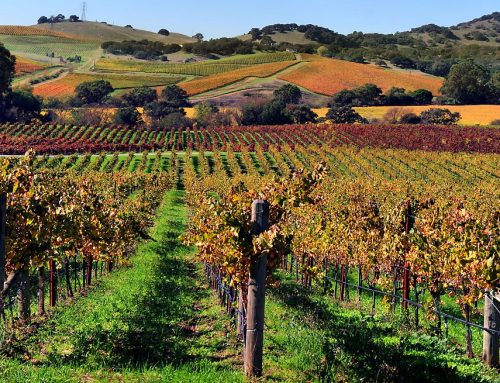
The men who made Italy also, quite literally, made its wine. In the mid-19th century a handful of aristocrats and soldiers stitched a patchwork of rival states into a single nation — and the same people gave the new country three of its greatest wines. Barolo, Chianti and Marsala are not just Italian wines; they are woven into the story of how Italy was born6. (See also: wine and conflict through the ages.)
Quick facts
- Count Cavour, architect of unification, helped create the first modern dry Barolo.
- Bettino Ricasoli, Italy’s second prime minister, devised the modern Chianti formula in 1872.
- Garibaldi’s Thousand launched the conquest of the south from the wine town of Marsala.
- The leaders of the Risorgimento built a nation and its wines at the same time.
Cavour and the king of wines
Count Camillo Benso di Cavour was the cool political genius of Italian unification — prime minister of Piedmont-Sardinia and the chief architect of the united kingdom proclaimed in 18611. He was also a modernising landowner obsessed with agriculture, and on his family estate in the Langhe hills he set out to improve the local wine.

Cavour brought in the French oenologist Louis Oudart, who fermented the local Nebbiolo grape fully dry to produce what is regarded as the first modern Barolo — the powerful red that would become known as “the king of wines” and the favourite of the royal House of Savoy4. The nobleman who helped forge a kingdom had, in the same years, helped forge its most regal wine.
The Iron Baron’s Chianti
If Cavour supplied the strategy of unification, Bettino Ricasoli supplied some of its iron will. Known as the “Iron Baron,” he was one of the driving forces of the Risorgimento and succeeded Cavour as prime minister of Italy in 18612.

At his ancestral Castello di Brolio, in the hills between Siena and Arezzo, Ricasoli pursued a second passion: perfecting the wine of Tuscany. In 1872 he set down the famous formula for Chianti — a blend built around the Sangiovese grape — that shaped the wine for the next century5. The man who briefly led the new Italy also wrote the recipe for its most famous everyday red.
Garibaldi lands at Marsala
The third strand of the story is the most dramatic. On 11 May 1860 the revolutionary general Giuseppe Garibaldi and his thousand red-shirted volunteers came ashore in Sicily to overthrow the Bourbon Kingdom of the Two Sicilies — and the town they landed at was Marsala, world-famous for its fortified wine3. (See also: Nero d’Avola, Sicily’s great red.)
Garibaldi’s thousand redshirts came ashore at a town famous for its wine.— Marsala, 11 May 18607
Marsala wine had been created decades earlier by the English merchant John Woodhouse, and British commercial interests in the port helped complicate any Bourbon response to the landing. From that wine town, Garibaldi swept across Sicily and up the peninsula, delivering the south to the cause of unification. Fittingly, the campaign that made Italy began at a place defined by its wine.
Wine and the new nation
Put the three stories together and a striking pattern appears: the founders of Italy were, again and again, the founders of its wines6.
| Figure | Role in unification | Wine legacy |
|---|---|---|
| Cavour | Architect and first prime minister | The first modern dry Barolo |
| Ricasoli | Second prime minister of Italy | The Chianti formula of 1872 |
| Garibaldi | Military hero of the Thousand | Landed at Marsala in 1860 |
It was no coincidence. The aristocrats who led the Risorgimento were also the great agricultural improvers of their day, and building a modern nation and building modern wines were, for them, parts of the same project. When Italians raise a glass of Barolo or Chianti today, they are toasting with the very wines their country’s founders helped create.
Frequently asked questions
More from this day in wine history
See everything else that happened on February 29 — who was born, what was bottled, and which laws were signed.
Read more
- The role of wine in the French Revolution
- The role of wine in the American Revolution
- Wine in royal courts and noble houses
References
- Encyclopaedia Britannica — Camillo Benso, conte di Cavour. ↑
- Encyclopaedia Britannica — Bettino Ricasoli. ↑
- Encyclopaedia Britannica — Expedition of the Thousand. ↑
- Eataly — Barolo Wine: the History of the Italian Red Wine. ↑
- SAQ — Ricasoli 1141: In the heart of Chianti. ↑
- Encyclopaedia Britannica — Risorgimento. ↑
- Italy Magazine — Marsala: a taste of history. ↑
Recommended reading


As an Amazon Associate, This Day in Wine History earns from qualifying purchases. Book recommendations are chosen independently.
Share This Story, Choose Your Platform!
Related Posts