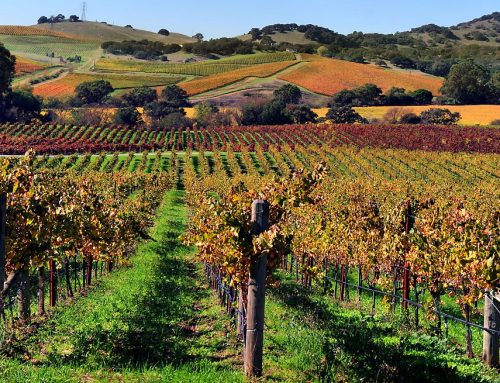
Wine has its own communion of saints. For centuries, the men and women who tended the vines lived at the mercy of frost, hail and rot — and when there was nothing else to be done, they prayed. Catholic Europe gave the vine a whole roster of heavenly patrons, each with a feast day stitched into the working year, each invoked to coax a good harvest out of an unpredictable sky3. Meet the wine saints — and the living traditions they still inspire.
Quick facts
- Saint Vincent of Saragossa (feast 22 January) is the great patron of vine-growers.
- A famous legend credits a donkey with the accidental discovery of vine pruning.
- Saint Martin of Tours (11 November) is honoured when the new wine is first tasted.
- Burgundy still holds the Saint-Vincent Tournante, a wine festival dating to 1938.
Why the vine needed patron saints
In Catholic Europe every trade had its heavenly patron, but few needed one as badly as the vigneron. A single spring frost, a hailstorm before harvest or an outbreak of rot could wipe out a year’s labour and income in an afternoon7. So the vine-grower turned to the saints — and, conveniently, the great feasts of the church calendar fell at exactly the hinge-points of the vineyard year, giving each stage of the work a patron to watch over it.
Saint Vincent, patron of the vignerons
The foremost of them is Saint Vincent of Saragossa, a deacon martyred in Spain around the year 304 under the emperor Diocletian1. Why this particular martyr became the patron of winegrowers is partly a happy accident of language: French vine-growers heard in his name the word vin, wine, and even the syllables vin-sang — wine and blood4. It helped enormously that his feast day, 22 January, falls in the depths of winter, precisely when growers head back into the frozen rows to begin the year’s pruning.
“À la Saint-Vincent, l’hiver monte ou descend.”— French vigneron’s proverb: at Saint Vincent’s, winter rises or falls5
That link is still celebrated. In Burgundy, the Saint-Vincent Tournante — the “rotating” Saint Vincent — has been held every January since 1938, when the Confrérie des Chevaliers du Tastevin revived it. Each year a different wine village hosts the festival, parading statues of Saint Vincent borrowed from the growers’ brotherhoods, and the whole côte turns out to bless the coming vintage6.
Saint Martin and the pruning donkey
If Vincent opens the vine-grower’s year, Saint Martin of Tours closes it. Martin became bishop of Tours in 371 and founded the great abbey of Marmoutier, between Tours and Vouvray, whose monks helped spread viticulture across the Loire2. His feast, 11 November, marks the end of the harvest and the moment the year’s new wine is first broached — often under a spell of mild weather the French still call l’été de la Saint-Martin, Saint Martin’s summer.

Martin’s name is also attached to viticulture’s most charming origin legend. As the story goes, an ass left to graze at Marmoutier nibbled a row of vines down to stubs — and the following season those brutally cut-back vines bore far more fruit than the rest, teaching the monks the secret of hard pruning7. The tale is told of Saint Martin, and sometimes of Saint Vincent; either way it enshrines a real truth of the vineyard — that the vine gives its best only when it is cut back hard.
Urban, Morand and the calendar of saints
Beyond the two great patrons stands a whole company of vineyard saints, each with a feast and a speciality3:
| Saint | Feast day | Associated with |
|---|---|---|
| Vincent of Saragossa | 22 January | Vine-growers; the start of pruning |
| Amand | 6 February | Vintners and brewers of Flanders |
| Urban of Langres | 25 May | Vine-growers, especially in Germany; frost |
| Morand | around 3 June | The vineyard workers of Alsace |
| Martin of Tours | 11 November | Winegrowers; the new wine |
Saint Urban of Langres, a bishop who according to tradition sheltered among the vines during persecution, became a particular favourite of German growers, invoked against the killing frosts of late May7. Behind them all stands the first vine-dresser of all: Noah, who in the book of Genesis plants the first vineyard after the Flood — the biblical patron of everyone who has ever coaxed wine from the ground.
Saints in the working year
Taken together, these patrons trace the vigneron’s whole calendar. The grower prunes under Saint Vincent in the frozen days of January, guards the tender shoots against frost around Saint Urban in May, and finally raises a glass of the new vintage at Saint Martin’s in November4. The prayers were never a substitute for skill, but they gave shape and hope to a life ruled by weather. And in festivals like the Saint-Vincent Tournante, that old alliance of faith and the vine is still, once a year, gloriously alive6.
Frequently asked questions
More from this day in wine history
See everything else that happened on April 7 — who was born, what was bottled, and which laws were signed.
Read more
- The Holy Grail and the wine of the Last Supper
- Wine in medieval Christianity, Islam and Judaism
- Catholicism’s influence on wine
References
- Encyclopaedia Britannica — Saint Vincent of Saragossa. www.britannica.com ↩
- Encyclopaedia Britannica — Saint Martin of Tours. www.britannica.com ↩
- The Drinks Business — Top 10 Wine Saints. www.thedrinksbusiness.com ↩
- The World of Fine Wine — St Vincent: patron saint of wine. worldoffinewine.com ↩
- Château de Pommard (École V) — Saint Vincent: the patron saint of winemakers. www.chateaudepommard.com ↩
- CooksInfo — St Vincent’s Day and the winemakers’ festival. www.cooksinfo.com ↩
- Loire Valley Wine Tour — The patron saints of winemakers. loirevalleywinetour.wordpress.com ↩
Recommended reading

Hugh Johnson
A sweeping history in which monks, saints and the medieval church loom large in the story of the vine.

Rod Phillips
A clear survey of wine through the ages, including its deep entanglement with Christian ritual and calendar.
As an Amazon Associate, This Day in Wine History earns from qualifying purchases. Book recommendations are chosen independently.
Share This Story, Choose Your Platform!
Related Posts