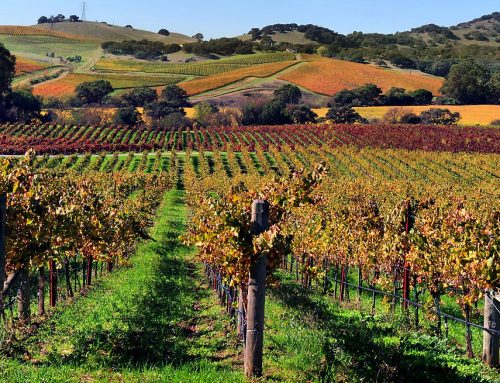
The Philistines have one of the worst reputations in history. Their very name became an insult — a “philistine” is someone crude and uncultured — and the Bible casts them as the swaggering enemies of ancient Israel. Yet archaeology tells a startlingly different story: the Philistines were a sophisticated people of Aegean origin who brought a refined culture of wine and feasting to the coast of the ancient Levant. Far from barbarians, they were among the great wine-drinkers of their age — and the coast they settled would stay famous for wine for more than two thousand years.
Quick facts
- The Philistines reached the Levant coast about 1175 BCE, with roots in the Aegean.
- Excavations at Gath reveal grape pips, feasting and a wine-soaked culture.
- Their coast later produced the celebrated Gaza wine of Byzantine times.
Sea Peoples on the wine coast
The Philistines were one of the “Sea Peoples” who swept into the eastern Mediterranean amid the collapse of the late Bronze Age, settling the southern coast of the Levant around 1175 BCE. They founded a league of five great cities — the Pentapolis of Gaza, Ashkelon, Ashdod, Ekron and Gath — and brought with them a material culture strikingly different from their neighbours’1.
An Aegean people, confirmed by their bones
For decades, scholars argued over where the Philistines came from, with their pottery and customs pointing to the Aegean world of the Greeks. In 2019 the question was settled in the most modern way imaginable: a landmark study of ancient DNA recovered from skeletons at Ashkelon2.
The results were remarkable. Individuals from the period when Philistine culture first appears carried a substantial dose of southern European ancestry — genetically closest to ancient populations of the Aegean, Sardinia and Iberia — a signature absent in the local population before them. The Philistines really were newcomers from the west, and within a couple of generations that genetic signal faded as they intermarried with their neighbours. They arrived Aegean, and became Levantine3.
A culture that drank like the Aegean

What the DNA confirmed, the pottery had long suggested. Philistine sites overflow with Aegean-style drinking vessels — kraters for mixing wine, bell-shaped bowls, jugs and cups — the equipment of a culture that took its wine seriously and drank it socially, exactly as its ancestors had around the Aegean4.
This was more than tableware. Excavations at Gath have uncovered the debris of substantial communal feasts — animal bones, symbolic objects and purpose-built installations — and archaeologists read these wine-and-meat gatherings as a way the Philistines kept their identity alive, performing their Aegean heritage in a foreign land, one shared cup at a time5.
For the Philistines, the wine cup was a badge of who they were — a memory of the Aegean, carried to a new shore and kept alive at the feast.— on the Philistine drinking culture5
The vineyards of Gath
The clearest evidence comes from Tell es-Safi, identified with Philistine Gath — in the biblical tradition, the home of Goliath. There, in layers dating to around the tenth century BCE, excavators led by Aren Maeir have found carbonised clusters of grape pips, direct proof that the Philistines were not merely importing wine but growing grapes and making it themselves6.
More recent study of the plant remains at Gath has gone further, suggesting that grapes and other plants played a part in Philistine ritual as well as the table — wine woven into the sacred as well as the social life of the city7.
Samson in the vineyards
The Bible itself, for all its hostility, sets one of its most famous stories squarely in Philistine wine country. Samson courts a woman of Timnah and passes through its vineyards — where he kills a lion with his bare hands — before posing his riddle at a seven-day wedding feast (Judges 14). Whatever one makes of the tale, it preserves a memory of the Philistine lowlands as a land of vines and celebration8.
Ashkelon by the sea

If Gath grew the wine, Ashkelon shipped it. The great Philistine port looked out across the Mediterranean and was ideally placed to trade by sea — the same role its shoreline would play, under later rulers, for many centuries to come. It was also at Ashkelon that the DNA which finally revealed the Philistines’ origins was recovered9.
Gaza wine: a coast famous for two thousand years
Long after the Philistines themselves had faded into the wider population, the coast they had settled stayed synonymous with wine. In the Byzantine period the region around Gaza and Ashkelon produced a celebrated sweet white — vinum Gazetum, “Gaza wine” — shipped across the Mediterranean in tall, distinctive “Gaza jars.” Archaeologists have even uncovered vast Byzantine wineries in the region capable of producing millions of litres a year10.
It is a striking continuity. The Aegean newcomers who planted a wine culture on that shore around 1175 BCE began a tradition that would still be filling Mediterranean cups — and Mediterranean shipwrecks — a millennium and a half later11.
| The evidence | What it tells us |
|---|---|
| Aegean-style kraters & bowls | A wine-mixing, communal drinking culture brought from the Aegean |
| Carbonised grape pips at Gath | The Philistines grew grapes and made wine locally by the 10th century BCE |
| Feasting deposits at Gath | Communal wine-and-meat feasts used to maintain their identity |
| Ancient DNA at Ashkelon | Aegean, Sardinian and Iberian ancestry — a migrant people from the west |
| Later “Gaza jars” | The same coast exporting famed wine some 1,500 years on |
Frequently asked questions
More from this day in wine history
See everything else that happened on September 1 — who was born, what was bottled, and which laws were signed.
Read more
References
- Encyclopaedia Britannica — Philistine (people). www.britannica.com ↩
- Feldman et al. — Ancient DNA Sheds Light on the Genetic Origins of Early Iron Age Philistines (Science Advances, 2019). www.science.org ↩
- Biblical Archaeology Society — Illuminating the Philistines’ Origins. www.biblicalarchaeology.org ↩
- World History Encyclopedia — Philistines. www.worldhistory.org ↩
- Near Eastern Archaeology — One Philistine’s Trash Is an Archaeologist’s Treasure: Feasting at Tell es-Safi/Gath. www.journals.uchicago.edu ↩
- Tell es-Safi/Gath Archaeological Project (Bar-Ilan University). gath.wordpress.com ↩
- Scientific Reports — Plant-related Philistine Ritual Practices at Biblical Gath. www.nature.com ↩
- Encyclopaedia Britannica — Samson. www.britannica.com ↩
- The Leon Levy Expedition to Ashkelon. www.digashkelon.com ↩
- Arkeonews — The World’s Largest Byzantine Winepresses Discovered in Israel. arkeonews.net ↩
- Encyclopaedia Britannica — Ashkelon. www.britannica.com ↩
Recommended reading


As an Amazon Associate, This Day in Wine History earns from qualifying purchases. Book recommendations are chosen independently.
Share This Story, Choose Your Platform!
Related Posts