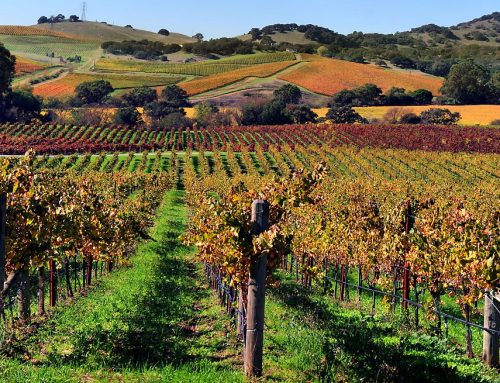
Retsina is the wine that tastes of the forest. Greek, pale and sharply piney, it is an acquired taste for many drinkers — and one of the oldest continuously made wines in the world. Its distinctive resinous tang is not a modern gimmick but the fossil of an ancient technology: a 3,000-year-old way of keeping wine fresh that the Greeks liked so much they simply never gave it up1.
Quick facts
- Retsina is white (or rosé) wine flavoured with pine resin, chiefly from the Aleppo pine.
- Resin was found in Greek wine amphorae from the 13th century BC.
- It began as a preservative and became a prized flavour in its own right.
- Retsina is an EU-protected traditional appellation of Greece.
An accident of the amphora
The story begins with a problem the ancients could not solve: how to keep wine from spoiling. Before airtight glass and cork, wine was stored and shipped in clay amphorae, and oxygen seeping through the porous clay could turn a jar to vinegar within weeks4. The solution was pine resin — smeared over stoppers and often the inside of the vessel to seal it against the air.

Traces of that resin have been found in Greek wine jars dating back to the 13th century BC2. And the resin did more than seal: it seeped into the wine, giving it a pungent, piney aroma. To the ancient Greek palate, that scent came to mean wine that was fresh and sound — and the taste stuck.
The resin left its mark — literally — on the wine.— on how retsina was born3
Keeping the taste on purpose
Here is the twist that makes retsina remarkable. When better technology finally arrived — sealed barrels, glass bottles, cork — the resinous flavour was no longer necessary, and it could easily have disappeared like so many other ancient tastes1. Instead, the Greeks kept it. They liked the flavour, associated it with their own tradition, and began adding pine resin deliberately, as a seasoning rather than a sealant. A quirk of ancient packaging had become a national style.
How retsina is made today
Modern retsina is made by adding small pieces of resin from the Aleppo pine to the grape must during fermentation; the resin is removed when fermentation ends, leaving its aroma behind3. The wine is built mostly on the Savatiano grape, with some Roditis, in the vineyards around Attica, Boeotia and Euboea near Athens. The amount of resin is a delicate judgement — too much overwhelms the wine, too little loses its character — and modern research has fine-tuned exactly how it is done6.
| Element | Detail |
|---|---|
| Main grape | Savatiano (with some Roditis) |
| Flavouring | Resin of the Aleppo pine |
| Home | Attica, Boeotia and Euboea |
| Status | EU-protected traditional appellation of Greece |
So distinctive is it that the European Union protects “retsina” as a traditional appellation: authentic retsina may come only from Greece (and a small part of Cyprus). It is the everyday wine of the Greek taverna — poured cold, drunk young, and made to be enjoyed with food and sunshine rather than pondered1.
From turpentine to revival
For much of the twentieth century, snobs dismissed retsina as harsh “turpentine” wine, a cheap holiday curiosity5. But a new generation of Greek winemakers has begun to take it seriously — using better grapes, a lighter hand with the resin and careful winemaking to craft retsinas of real finesse5. The result is a small revival for one of the world’s longest-lived wine traditions.
Few drinks carry their history so openly. To sip retsina is to taste, quite literally, the way the ancient world kept its wine alive — a flavour three thousand years in the making2.
Frequently asked questions
More from this day in wine history
See everything else that happened on February 29 — who was born, what was bottled, and which laws were signed.
Read more
References
- Wines of Greece — Retsina. ↑
- GreekReporter — Retsina: A 2,000-Year Legacy of Greece’s People’s Wine. ↑
- Tasting Table — Retsina, the Traditional Greek Wine Made From Pine Resin. ↑
- World History Encyclopedia — Wine in the Ancient Mediterranean. ↑
- Grape Collective — A New Style of Retsina Revitalizing the Tradition. ↑
- Food Chemistry (PMC) — Optimisation of Retsina Wine Quality. ↑
Recommended reading


As an Amazon Associate, This Day in Wine History earns from qualifying purchases. Book recommendations are chosen independently.
Share This Story, Choose Your Platform!
Related Posts