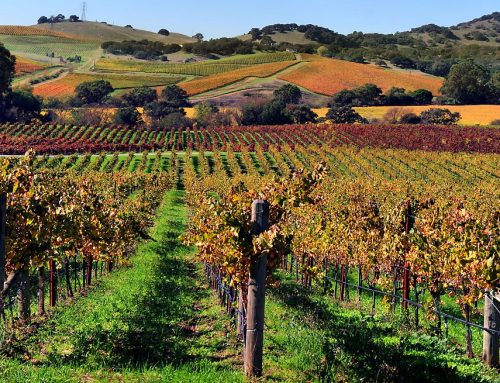
Shiraz is Australia’s grape — its most planted variety and the source of its greatest wine. The name whispers of ancient Persia, of the storied wine city of Shiraz. But the truth is a tangle of romantic myth, hard DNA science, and a Scotsman who filled a ship with vine cuttings nearly two centuries ago1.
Quick facts
- Shiraz is simply the Australian name for the French grape Syrah.
- It reached Australia via James Busby’s vine collection of 1832.
- DNA proved Syrah is a native French grape, not Persian.
- Phylloxera-free Barossa holds some of the world’s oldest vines.
Busby’s vines
The story of Australian Shiraz begins with James Busby, remembered as the father of Australian wine. A Scot who had written a viticulture textbook while still in his twenties, Busby toured the vineyards of Europe in 1831 and gathered a great collection of cuttings, including Syrah from its heartland in France’s Rhône Valley. In 1832 the vines reached Australia, were planted in the Sydney Botanic Gardens and the Hunter Valley, and from there spread across the young colony1.
Persia or France?
Why “Shiraz”? For centuries, the Persian city of Shiraz was famed for its wine, and a charming legend held that a Crusader knight had carried a Persian vine home to found the Rhône’s great Hermitage vineyard2. It is a lovely story — and completely untrue. In 1998, DNA analysis at the University of California settled the matter: Syrah is a native French grape, the natural offspring of two obscure varieties of southeastern France, Dureza and Mondeuse Blanche3.
The name says Persia — but Shiraz is a French grape at heart.— the truth about Syrah3
“Shiraz” is simply the name that stuck in the English-speaking New World, while France kept “Syrah.” Same grape, two identities — and, often, two very different styles.
The oldest vines on Earth

Australia holds a treasure the Old World largely lost. Because South Australia enforced strict quarantine, regions like the Barossa Valley stayed free of phylloxera — the plague that destroyed most of Europe’s old vineyards. As a result, Barossa is home to some of the oldest continuously producing vines on the planet, the most ancient of them Shiraz planted in 1843, with thick, gnarled trunks and tiny, concentrated crops4.
Grange, and a national icon
Australian Shiraz found its crowning glory in 1951, when Penfolds’ winemaker Max Schubert, inspired by a trip to Bordeaux, made his first experimental Grange — a Shiraz built to age for decades. He made only a few barrels and gave most away; today Penfolds Grange is Australia’s most famous wine, and single old bottles sell for eye-watering sums5. From Busby’s cuttings to the Barossa’s ancient vines to Grange, Shiraz became the beating heart of Australian wine.
Frequently asked questions
More from this day in wine history
See everything else that happened on February 7 — who was born, what was bottled, and which laws were signed.
Read more
- Australia’s convict wine story
- The plague that spared Barossa’s old vines
- Syrah in the tropics of Brazil
References
- Club Oenologique — The Story of Australian Shiraz: The Oldest Vines on the Oldest Soils. ↑
- Wine Australia — Shiraz. ↑
- McLaren Vale Cellars — The Origins of the Syrah / Shiraz Grape: Unravelling a Viticultural Mystery. ↑
- Barossa Australia — Old Vine Charter. ↑
- The Drinks Business — Single Bottle of Penfolds Grange 1951 Shatters World Record Price. ↑
Recommended reading


As an Amazon Associate, This Day in Wine History earns from qualifying purchases. Book recommendations are chosen independently.
Share This Story, Choose Your Platform!
Related Posts