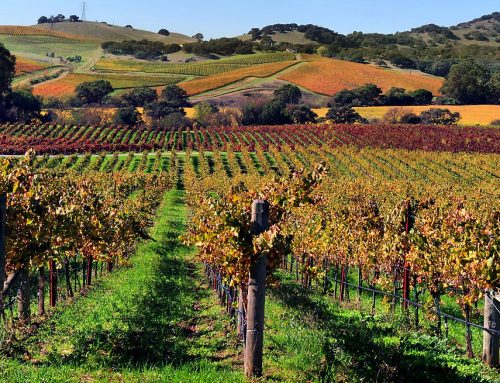
It is one of history’s most provocative theories: that Rome was slowly poisoned by its own wine. The Romans sweetened and preserved wine with a syrup boiled in lead pots, drank from lead-touched cups and drew water through lead pipes — and some scholars have argued that the resulting lead poisoning helped bring down the empire. The truth is more tangled, and more interesting, than the headline: the Romans really did lace their wine with a sweet poison, some of them even suspected lead was dangerous, and yet “lead killed Rome” remains far from proven.
Quick facts
- Romans sweetened wine with sapa, a syrup boiled down in lead pots.
- This produced lead acetate — genuinely sweet, and genuinely toxic.
- Whether it helped topple Rome remains hotly debated.
Rome ran on wine
Wine was woven into every level of Roman society, from the emperor’s table to the soldier’s ration. Romans usually drank it watered and often sweetened, and vast quantities flowed through the empire. Anything that tainted Roman wine, therefore, had the potential to touch an enormous number of people1.
Sapa: the sweetener with a secret

To sweeten and preserve wine, Romans boiled grape must down into a concentrated syrup called sapa or defrutum. Crucially, their agricultural writers advised boiling it in vessels of lead, not bronze — and were explicit about why. The great farming author Columella recommended lead pots because bronze spoiled the flavour23.
The vessels in which the boiled-down must is prepared should be of lead rather than of bronze; for in the boiling the bronze throws off copper-rust and spoils the flavour.— Columella, On Agriculture (1st century CE)2
The sweetness that was poison
What Columella could not know was the chemistry. Acidic grape juice reacts with a lead vessel to form lead acetate — a compound so sweet it was later nicknamed “sugar of lead” — which is exactly why the lead-boiled syrup tasted better. Modern laboratory recreations of Roman sapa have measured hundreds, even thousands, of milligrams of lead per litre; and syrups like these were everywhere, called for in more than eighty recipes of the Roman cookbook attributed to Apicius4.
The elder Pliny, that tireless recorder of Roman life, likewise noted that lead vessels were preferred for boiling down must — unwittingly documenting how a sweet poison had been built into the Roman kitchen5.
Lead everywhere — but they had an inkling

Wine was not the only source. Rome’s famous plumbing ran through lead pipes — our word derives from the Latin plumbum, lead — and lead turned up in cookware and cosmetics too. Yet the Romans were not entirely blind to the danger. The architect Vitruvius, writing in the first century BCE, warned against lead pipes, recommending earthenware instead, having noticed that the men who worked with lead were sickly and pale67.
Water is much more wholesome from earthenware pipes than from lead … we can take example by the workers in lead, who are of a pallid colour.— Vitruvius, On Architecture (1st century BCE)7
Lead was simply too cheap, soft and useful to give up. The warning was there; convenience won.
The poisoning hypothesis
In 1983 the geochemist Jerome Nriagu made the boldest case of all. In a much-cited article, “Saturnine Gout Among Roman Aristocrats,” he argued that chronic lead poisoning — with its symptoms of gout, infertility and mental disturbance — ran rife among the wine-drinking Roman elite, and that this helped explain the erratic behaviour of emperors and the decline of the ruling class8.
The Romans sweetened their wine with the very metal that, some believe, helped dull their empire.— on the lead hypothesis8
The case against
Many scholars are unconvinced. In 2014 a team led by Hugo Delile analysed the sediments of the Tiber and surviving Roman pipes, and found that the lead plumbing had raised lead levels in Rome’s tap water to as much as a hundred times the natural background — a striking figure, yet, they concluded, still “unlikely to have represented a major health risk”9.
Other researchers agree that the exposure, though real, was probably too low to cause mass poisoning, and note that Rome fell over centuries for a tangle of political, military and economic reasons. Blaming a single toxin, most now argue, is far too neat10.
A cautionary vintage
What survives scrutiny is narrower but genuinely unsettling: the Romans really did manufacture a sweet, toxic lead compound and add it to their wine and food, they used it on a vast scale, and lead exposure across Roman life was real and cumulative — even as one of their own writers warned against it. Whether it measurably weakened the empire is unproven and probably unprovable11.
| Source of lead | What it was |
|---|---|
| Sapa / defrutum | Grape must boiled in lead pots to sweeten and preserve wine — the biggest dietary source |
| Lead acetate | “Sugar of lead” — the sweet, toxic compound the boiling produced |
| Lead pipes (fistulae) | Rome’s water system; the word plumbing comes from plumbum, lead |
| Cookware & cosmetics | Further everyday, cumulative exposure |
But as a warning about swallowing something sweet without knowing what is in it, the tale of Roman wine has lost none of its bite.
Frequently asked questions
More from this day in wine history
See everything else that happened on September 4 — who was born, what was bottled, and which laws were signed.
Read more
References
- Encyclopaedia Britannica — ancient Rome. www.britannica.com ↩
- Encyclopaedia Romana (LacusCurtius, University of Chicago) — Lead Poisoning and Rome. penelope.uchicago.edu ↩
- Encyclopaedia Britannica — Lucius Junius Moderatus Columella. www.britannica.com ↩
- Ancient Origins — Romans Loved Toxic “Sugar of Lead” Wine. www.ancient-origins.net ↩
- Encyclopaedia Britannica — Pliny the Elder. www.britannica.com ↩
- Roman Empire — Lead Poisoning in Ancient Rome: Did They Know? roman-empire.net ↩
- Encyclopaedia Britannica — Vitruvius. www.britannica.com ↩
- Nriagu, J.O. — Saturnine Gout Among Roman Aristocrats (New England Journal of Medicine, 1983). www.nejm.org ↩
- Delile et al. — Lead in Ancient Rome’s City Waters (PNAS, 2014). www.pnas.org ↩
- Chemistry World — Lead Piping “Unlikely” to Have Poisoned Romans. www.chemistryworld.com ↩
- Encyclopaedia Britannica — lead poisoning. www.britannica.com ↩
Recommended reading


As an Amazon Associate, This Day in Wine History earns from qualifying purchases. Book recommendations are chosen independently.
Share This Story, Choose Your Platform!
Related Posts