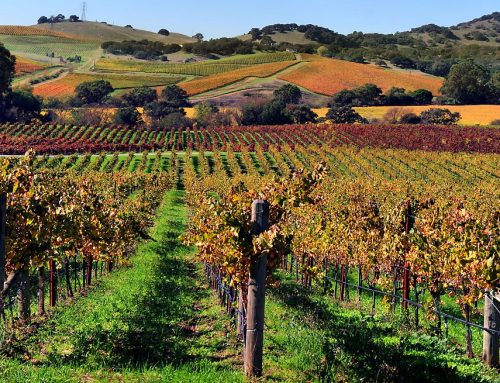
Godello is the great survivor of Spanish wine — a Galician white grape that came within a whisker of extinction, was rescued by a handful of determined researchers in the 1970s, and has since risen to become, for many, Spain’s finest white after Albariño. Textured, mineral, and ageworthy, it is often called “Spain’s answer to white Burgundy.” This is the remarkable story of a grape brought back from the very brink.
Godello at a glance
- Where: North-west Spain — above all Valdeorras in Galicia, plus Bierzo and Monterrei
- Also known as: Gouveio in Portugal’s Douro valley
- Character: Citrus and stone fruit, mineral salinity, fine texture, and real ageing potential
- Soils: Slate (pizarra) and granite, on slopes above the Sil river
- Rescued: By the ReViVal project of 1974–1976, when the grape was nearly extinct
- Modern benchmark: Rafael Palacios, in Valdeorras from 2004
Rescued from the brink
By the middle of the twentieth century, Godello was all but gone. Phylloxera, rural depopulation, and the pull of higher-yielding grapes had reduced this demanding variety to a scattering of old vines, and it seemed destined to vanish entirely from its Galician homeland.1 Its salvation came from an unlikely quarter: a coordinated viticultural rescue.
Between 1974 and 1976, a project known as ReViVal, involving agricultural researchers and extension workers — among them the distinguished ampelographer Luis Hidalgo — set out to track down, propagate, and replant the surviving Godello vines of Valdeorras.1 The first replanted harvest yielded only a few thousand kilos of fruit, but it was enough: the grape had been saved. In 1986, the founding of Bodegas Godeval carried the revival forward, proving that rescued Godello could make serious, characterful wine.
Valdeorras: the valley of gold
Godello’s heartland is Valdeorras, in the far east of Galicia, where the grape clings to terraced slopes of slate and granite above the Sil river.2 The name itself means “valley of gold,” a memory of the region’s Roman past, when the empire tore vast quantities of gold from these hills — the spectacular ruined mines of Las Médulas lie just over the border in neighbouring Bierzo. Wine has been made here since those Roman days.
Granted its DO in 1945, Valdeorras is one of Galicia’s oldest appellations, yet for decades it was known mostly for bulk wine.2 It was the rediscovery of Godello — and of the region’s poor, well-drained slate soils and cool, hilly, Atlantic-touched climate — that transformed Valdeorras into one of Spain’s most exciting sources of fine white wine.
Spain’s answer to white Burgundy
What makes Godello so admired is a rare combination of freshness and substance. Its wines offer bright citrus and orchard fruit — lime, grapefruit, white peach — over a saline, stony minerality drawn from the slate, all carried by a fine, almost creamy texture and firm underlying acidity.3 Unlike lighter, more overtly aromatic whites, Godello has real weight and structure, which is why it takes so well to fermentation and ageing in oak and on its lees.
The best examples can age gracefully for a decade or more, developing a honeyed, nutty complexity, and it is this capacity for depth and longevity that has earned Godello its frequent comparison to fine white Burgundy.3 It is a wine of quiet seriousness — less immediately flashy than Albariño, but for many drinkers even more rewarding.
Rafael Palacios and the modern benchmark
Godello’s rise to prominence owes much to one man. In 2004, Rafael Palacios — younger brother of the Priorat and Bierzo pioneer Álvaro Palacios — settled in Valdeorras, determined to devote himself entirely to the grape.4 His single-vineyard As Sortes, made from old vines on high slate terraces, became the benchmark by which all fine Godello is now measured, and helped lift the grape’s reputation to new heights.
The Palacios family story is remarkable in itself: three siblings, three revivals — Álvaro in Priorat and Bierzo, Rafael in Valdeorras — each rescuing an old Spanish terroir and grape and restoring it to greatness. In Godello, Rafael Palacios found a grape whose comeback mirrored his own family’s mission, and he made it one of the proudest names in modern Spanish white wine.
One grape, two countries
Like so many grapes of Atlantic Iberia, Godello does not stop at the border. The same variety grows in Portugal’s Douro valley under the name Gouveio, where it is one of the traditional white grapes of the region — another reminder that the vine cultures of Spain and Portugal are branches of one deep, shared tradition.5 In both countries it is valued for exactly the same qualities: freshness, minerality, and the ability to make white wine of genuine structure in a warm climate.
Godello’s revival is also part of something larger. Across Galicia, a generation of growers has rescued native grapes and forgotten hillsides — Albariño in Rías Baixas, Mencía in Ribeira Sacra, and Godello in Valdeorras — turning the cool, green north-west into one of the most dynamic corners of the wine world.5 That a grape once reduced to a few surviving vines now sits among Spain’s most prized whites is a fitting symbol of that whole reawakening.
Godello at the table
Godello’s weight and minerality make it one of the most versatile whites at the table.3 Fresh, unoaked styles are superb with Galicia’s abundant seafood — scallops, hake, and the region’s prized shellfish — while the richer, barrel-aged and lees-aged wines have the body to partner roast chicken, pork, creamy sauces, and firm cheeses in a way few Spanish whites can.
It is a wine that bridges worlds: fresh enough for a summer terrace, serious enough for the finest table. From a grape that very nearly disappeared, Godello has become proof of how much would have been lost — and of how much can be saved when a few people decide a piece of heritage is worth rescuing.
Why Godello nearly vanished
Godello’s brush with extinction was no accident of fashion but a matter of hard economics. It is a naturally low-yielding grape, and in the lean decades of the twentieth century, as Galicia’s rural population drained away to the cities, growers who stayed had every incentive to replace demanding old vines with more productive, easier varieties.1 A grape that gave little fruit and grew best on back-breaking terraces was exactly the kind of heritage that a struggling countryside could not afford to keep.
That is what makes its rescue so significant. The ReViVal researchers were not merely saving a wine; they were preserving a piece of Galician biodiversity and culture that the market had condemned. Godello’s comeback — from a few surviving vines to one of Spain’s most prized whites — has become a model for grape-conservation efforts across Europe, and a quiet argument that the varieties worth saving are often the ones hardest to grow.
Keep exploring Spanish wine
- Albariño — Galicia’s other great white, and Godello’s coastal cousin.
- Mencía — the red grape of the same north-western revival.
- Rías Baixas & Spanish Wine: The Complete History.
Bring a piece of wine history home
We’re building a shop of vintage-style wine-region maps and prints — including the slate valleys of Galicia. Visit the shop →
Frequently asked questions
Read more
To go deeper, these books make excellent companions:


As an Amazon Associate, This Day in Wine History earns from qualifying purchases. These are affiliate links; it costs you nothing extra and helps fund our research.
References & further reading
- Jancis Robinson, Julia Harding & José Vouillamoz, Wine Grapes: A Complete Guide to 1,368 Vine Varieties (Allen Lane / Ecco, 2012), the entry on Godello and its identity with Portugal’s Gouveio; with contemporary accounts of the ReViVal recovery project (1974–1976) and the work of the ampelographer Luis Hidalgo, author of the standard Tratado de Viticultura. ↩
- Jancis Robinson & Julia Harding (eds.), The Oxford Companion to Wine, 4th ed. (Oxford University Press, 2015), s.v. “Godello,” “Valdeorras,” and “Galicia.” ↩
- Sarah Jane Evans MW, The Wines of Northern Spain (Infinite Ideas Classic Wine Library, 2018), on Godello’s character, oak- and lees-ageing, and its comparison to white Burgundy. ↩
- Consello Regulador da DO Valdeorras, official prego de condicións (DO established 1945); and estate records of Bodegas Godeval and Rafael Palacios. ↩
- Hugh Johnson & Jancis Robinson, The World Atlas of Wine, 8th ed. (Mitchell Beazley, 2019), on Valdeorras, the Douro, and the grapes of north-west Iberia. ↩
Share This Story, Choose Your Platform!
Related Posts