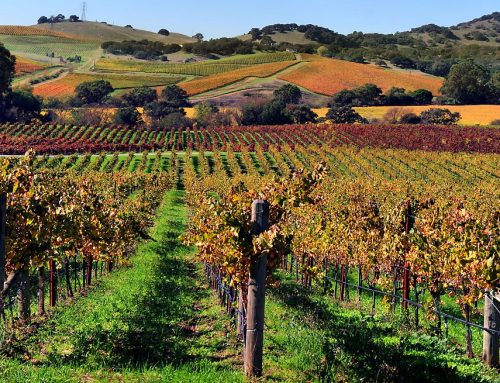
If Michel Rolland was the great apostle of the modern “international” wine, Alberto Antonini is its most eloquent answer. A Tuscan oenologist with an equally global career, Antonini has spent decades urging winemakers to do the opposite of the Bordeaux recipe: use less oak, plant native grapes, and let each place speak for itself1.
Quick facts
- Alberto Antonini is a Tuscan oenologist and global consultant.
- He once ran winemaking at Antinori, home of the Super Tuscans.
- He champions native grapes, terroir and minimal oak.
- His Altos Las Hormigas pioneered terroir-driven Malbec in Mendoza.
From Antinori to the world
Antonini graduated in oenology in 1986 and rose fast: through Frescobaldi and Col d’Orcia to become head winemaker at Antinori, taking over from the legendary Giacomo Tachis, architect of the Super Tuscans2. In 1997 he set out on his own as a consultant, and his client list now spans Italy, Argentina, Chile, Uruguay, the United States, Armenia, Australia and beyond — a globe-trotter every bit as busy as the flying winemakers he gently opposes1.
The anti-recipe
Where the international style prized ripeness, extraction and new oak, Antonini pushes the other way. He uses oak sparingly if at all, favours large old casks or concrete over small new barriques, and above all encourages producers to abandon what he calls the “colonisation of the Bordeaux recipe” and return to their own indigenous grapes and traditions3. His goal is authenticity: wines that taste unmistakably of where they come from.
Overcome the colonisation of the Bordeaux recipe — and return to native grapes.— Alberto Antonini’s creed3
Malbec of place

His ideas found their clearest expression in Argentina. In 1995 Antonini co-founded Altos Las Hormigas in Mendoza, one of the pioneers of serious Malbec. Working with the soil specialist Pedro Parra, the team mapped the region’s geology to find the finest sites — and in 2012 took the bold step of abandoning new oak entirely, ageing their Malbec in large old foudres to let the vineyard, not the barrel, do the talking4.
Two visions of wine
Between them, Rolland and Antonini map the great argument of modern wine: the polished international style against the pursuit of terroir and tradition. Both are brilliant, both are global, and both have made better wine wherever they go. But as tastes have shifted back toward freshness, place and native varieties, Antonini’s quiet crusade — carried on today at his own Tuscan estate, Poggiotondo, and in regenerative projects worldwide — looks more and more like the future5.
Frequently asked questions
More from this day in wine history
See everything else that happened on October 7 — who was born, what was bottled, and which laws were signed.
Read more
- Michel Rolland, the other pole of modern wine
- Antinori, where Antonini made his name
- Malbec, from Cahors to Mendoza
References
- Club Oenologique — Winemaker Alberto Antonini on Terroir, Teamwork and the Unknown. ↑
- Wine Spectator — Winemaker Talk: Alberto Antonini. ↑
- LittleWine — An Interview with Alberto Antonini on Regenerative Agriculture at Alkina. ↑
- Altos Las Hormigas — About Us. ↑
- The Real Review — Alberto Antonini’s Poggiotondo Wines. ↑
Recommended reading


As an Amazon Associate, This Day in Wine History earns from qualifying purchases. Book recommendations are chosen independently.
Share This Story, Choose Your Platform!
Related Posts