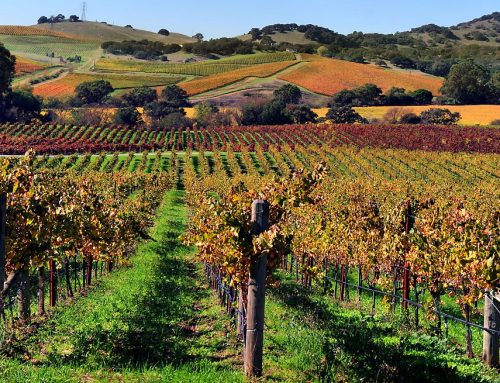
Chile is a wine country shaped by its geography — a thin ribbon of land walled off by the Andes, the Atacama desert, the Pacific and the Antarctic ice. That isolation gave Chile something no other wine country has: vineyards the vine louse phylloxera never reached, and a lost Bordeaux grape, believed extinct, quietly surviving for over a century1.
Quick facts
- Spanish colonists planted the first vines around 1554; the humble País grape ruled for centuries.
- In 1851 Silvestre Ochagávia brought fine French varieties from Bordeaux.
- Chile is phylloxera-free — and home to rediscovered Carménère.
The gift of the conquistadors
Vines arrived with the Spanish conquest in the sixteenth century, around 1554, planted to supply wine for the Mass and the colonial table. For three hundred years the workhorse was the País grape — the same humble Mission variety grown across Spanish America — making rough, everyday wine in Chile’s warm central valleys1.
The French turn, 1851
Chile’s leap came in the nineteenth century. In 1851 the wealthy landowner Silvestre Ochagávia planted French grape varieties — Cabernet Sauvignon, Merlot and others — brought directly from Bordeaux, and other rich Chileans, dazzled by France, followed suit. Grand estates such as Concha y Toro, founded in 1883, hired French winemakers and remade Chilean wine in a Bordeaux image2.
The land phylloxera forgot
Then history handed Chile a gift. When phylloxera devastated the vineyards of Europe and, later, much of the world, Chile’s natural walls — mountains, desert and sea — kept the pest out entirely. To this day Chilean vines grow on their own ungrafted roots, direct descendants of pre-phylloxera French stock, and Chilean cuttings even helped replant a ravaged Europe3.
The lost grape rediscovered

That preserved history produced a sensation. Carménère, an old Bordeaux grape all but wiped out in France by phylloxera, had come to Chile in the 1850s and been grown for over a century in the belief that it was Merlot. In November 1994 the French ampelographer Jean-Michel Boursiquot, walking the vineyards of Maipo, recognised the imposter — and Chile suddenly had a signature grape all its own4.
For 140 years Chile had grown a “Merlot” that was really a grape France thought extinct.— the Carménère rediscovery, 19944
Between the Andes and the sea
Chile’s modern strength is its range of terroirs, strung along that narrow country. Warm Maipo makes structured Cabernet; cool, foggy Casablanca and San Antonio, chilled by the Pacific’s Humboldt current, make crisp Sauvignon Blanc, Chardonnay and Pinot Noir; and valleys from Aconcagua to Colchagua fill in between. From the 1980s, foreign investment and modern cellars turned Chile into a major exporter of both value and fine wine5.
A wine and a national identity
Carménère has become a point of national pride, celebrated each year on Carménère Day, and Chile now markets itself confidently on the world stage — not as a cheap imitator of France, but as a distinctive country with its own grape, its own untouched vineyards and its own dramatic land between mountains and ocean6.
Frequently asked questions
More from this day in wine history
See everything else that happened on November 24 — who was born, what was bottled, and which laws were signed.
Read more
- Carménère, Chile’s signature grape
- Wine across the Andes in Argentina
- Bordeaux, source of Chile’s French vines
References
- Encyclopaedia Britannica — Chile. www.britannica.com ↩
- The Wine Diplomats — Chilean Wine History. winediplomats.com ↩
- Wine-Searcher — Chile Wine. www.wine-searcher.com ↩
- Wine Enthusiast — Rediscovering Chilean Carménère. www.wineenthusiast.com ↩
- Wines of Chile — Chilean Wine Regions. www.winesofchile.org ↩
- South America Wine Guide — Carménère Day and the story of a mistaken identity. southamericawineguide.com ↩
Recommended reading

Hugh Johnson
Good on Chile’s phylloxera-free vineyards and its French inheritance.

As an Amazon Associate, This Day in Wine History earns from qualifying purchases. Book recommendations are chosen independently.
Share This Story, Choose Your Platform!
Related Posts