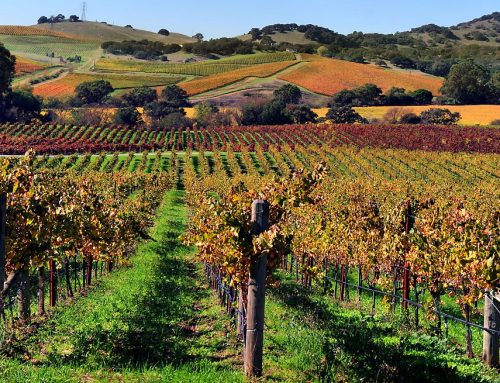
Barolo is the king of Italian wine. Made entirely from the Nebbiolo grape in a cluster of fog-wrapped hills in Piedmont, it is pale as garnet yet ferociously powerful — perfumed with tar, roses, cherry and truffle, and able to age for decades. Long called “the king of wines and the wine of kings,” Barolo has been the wine of a count who unified Italy, the favourite of the royal House of Savoy, and the prize in one of the bitterest feuds in modern winemaking. This is the full story of Barolo.
What: Italy’s most prestigious red wine, from a small group of communes in the Langhe hills of Piedmont, north-west Italy
Grape: 100% Nebbiolo — pale in colour, huge in tannin and perfume
Nickname: “the king of wines and the wine of kings”
Ageing: a minimum of 38 months (at least 18 in wood); Riserva a minimum of 62 months
Dates that matter: mid-1800s (Barolo turned dry; the wine of the Risorgimento) • 1980s–90s (the Barolo Wars) • 2010 (the crus mapped) • 2014 (the Langhe made a UNESCO site)
The king of wines
Barolo is made from a single grape, Nebbiolo, in just a handful of villages south-west of Alba — La Morra, Barolo, Castiglione Falletto, Serralunga d’Alba, Monforte d’Alba and a few smaller neighbours. Nebbiolo is a paradox: its wines are pale and translucent, almost like an old Burgundy, yet they are among the most powerful and long-lived reds on earth, packed with grippy tannin and searing acidity beneath a haunting perfume often described as “tar and roses.” The grape ripens late, as the autumn nebbia (fog) settles over the hills — the likely source of its name — and it is fiercely particular about where it grows, which is why truly great Barolo comes from so small a patch of the world.12
From sweet to sovereign: the birth of dry Barolo
Barolo has not always been the mighty dry red we know. Into the early 1800s the Nebbiolo of these hills was often left sweet and only lightly fermented. Its transformation came from an aristocratic partnership: the Marchesa Giulia Falletti di Barolo, the last marchioness of the Barolo estate, engaged a French oenologist, Louis Oudart, to vinify a fully dry, age-worthy wine in the manner of Bordeaux. The result impressed the most important man in Italy — Camillo Benso, Count of Cavour, the statesman who would engineer Italian unification and, at nearby Grinzane, a Nebbiolo grower himself. Barolo became the wine of the House of Savoy and of the Risorgimento, poured as a young nation toasted its own birth: the “wine of kings,” perfected, fittingly for Italy’s most patriotic red, with a little French help.3
Barolo was made dry by a French winemaker and a nation-building count — and became the wine of Italy’s birth.
The Barolo Wars
A century later, Barolo went to war with itself. Through the 1980s and ’90s a group of “modernists” — the Barolo Boys — broke with tradition to make richer, softer, earlier-drinking wines, using shorter fermentations and small new French oak barriques. The “traditionalists” were appalled, defending the old regime of very long macerations and ageing in huge old oak casks (botti). The dispute split families and villages and became genuinely bitter — the most famous stylistic feud in modern wine. In the end it cooled into a truce, and the great irony is that both sides learned from each other: the wines across Barolo are better today than ever, and the trend has swung back toward a subtler, more traditional style that lets the vineyard speak.4
The crus: Barolo’s answer to Burgundy
Like Burgundy, Barolo has come to believe that the exact patch of hillside matters above all. Growers had spoken for generations of favoured single vineyards, and in 2010 the idea was written into law: the Barolo zone was mapped into around 170 named crus, the Menzioni Geografiche Aggiuntive, so a label can now name the precise slope a wine came from. The most storied is Cannubi, a gentle ridge in the commune of Barolo whose name has appeared on bottles since the eighteenth century and which growers have fought over in court. The differences are real: the wines of Serralunga and Monforte tend to be powerful and structured, those of La Morra and Barolo more perfumed and elegant — the same grape speaking in different accents from one hill to the next.5
How Barolo is made — and why it needs time
Barolo is defined as much by patience as by place. By law it may not be sold until more than three years after the harvest, including at least eighteen months in wood; a Riserva must age more than five years. Even then, a serious Barolo is often ferociously tannic and tightly closed in its youth, needing a further decade or more in the cellar to unfurl into its full glory of dried rose, tar, cherry, leather and truffle. This is not a wine to grab and gulp; it is one of the world’s great vins de garde, made to be waited for — which is a large part of its mystique, and its price.6
What Barolo tastes like, and how to drink it
Do not be fooled by the pale, bricking colour: Barolo is a big, demanding wine. Expect high acidity, firm tannins, and aromas that famously combine roses and tar with sour cherry, dried herbs, leather and, in older bottles, the haunting note of white truffle — the very truffles that grow in these same Langhe hills and that Barolo partners so perfectly at the table. Young Barolo rewards decanting and a hearty plate: braised beef (the local brasato al Barolo is cooked in it), game, aged cheese, or anything rich enough to stand up to the tannins. Old Barolo, given the decades it deserves, becomes one of the most sublime and ethereal red wines in existence.7
Barolo vs Barbaresco
Barolo’s close cousin, Barbaresco, comes from villages a few miles north-east, on slightly warmer, lower ground where Nebbiolo ripens a little earlier. The two are made from the same grape in almost the same way, and the old rule of thumb calls Barolo the “king” and Barbaresco the “queen”: Barolo more powerful, structured and slow to mature; Barbaresco a touch softer, more perfumed and approachable a little younger. In truth the finest examples of each overlap, and Barbaresco — long overshadowed, then rescued by Angelo Gaja — now stands as Barolo’s equal in quality, if not yet in fame.8
Keep exploring
- Piedmont wine: Barolo’s home, from Nebbiolo to vermouth
- Nebbiolo: the noble grape behind Barolo
- Angelo Gaja: the king of Barbaresco
- Italian wine: the complete history
A map of the wine regions for your wall, or a new wine-history story in your inbox every week.
Read more
To go deeper, these books make excellent companions:


As an Amazon Associate, This Day in Wine History earns from qualifying purchases. These are affiliate links; it costs you nothing extra and helps fund our research.
Sources & further reading
- Kerin O’Keefe, Barolo and Barbaresco: The King and Queen of Italian Wine (Berkeley: University of California Press, 2014) — the definitive English-language study; and The Oxford Companion to Wine, 4th ed. (Oxford: Oxford University Press, 2015), s.v. “Barolo.” University of California Press. ↩
- The Oxford Companion to Wine, 4th ed. (OUP, 2015), s.v. “Nebbiolo”; and Ian D’Agata, Native Wine Grapes of Italy (Berkeley: University of California Press, 2014). Oxford Reference. ↩
- O’Keefe, Barolo and Barbaresco (UC Press, 2014); Marchesi di Barolo, “History” (on the Falletti, Louis Oudart and Cavour); and The Oxford Companion to Wine, 4th ed. (OUP, 2015), s.v. “Barolo.” marchesibarolo.com. ↩
- O’Keefe, Barolo and Barbaresco (UC Press, 2014) — on the modernist–traditionalist “Barolo Wars”; and The Oxford Companion to Wine, 4th ed. (OUP, 2015), s.v. “Barolo.” ↩
- The Oxford Companion to Wine, 4th ed. (OUP, 2015), s.v. “Barolo” and “cru” — on the Menzioni Geografiche Aggiuntive (2010) and Cannubi. ↩
- Nicolas Belfrage MW, Barolo to Valpolicella: The Wines of Northern Italy (London: Faber & Faber, 2003); and The Oxford Companion to Wine, 4th ed. (OUP, 2015), s.v. “Barolo” — on the DOCG ageing rules. ↩
- The Oxford Companion to Wine, 4th ed. (OUP, 2015), s.v. “Barolo” and “Nebbiolo” — on style and food pairing. ↩
- O’Keefe, Barolo and Barbaresco: The King and Queen of Italian Wine (UC Press, 2014) — on the comparison between the two wines. ↩
Share This Story, Choose Your Platform!
Related Posts