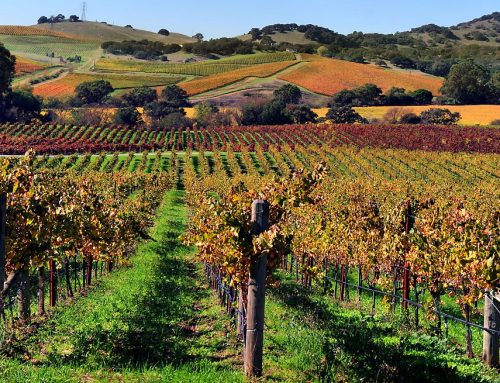
A hot, dry, sunburnt continent on the far side of the world, with a tiny population and vines that rotted on their first arrival — Australia had every reason never to become a wine country at all. Instead it became one of the great wine powers on Earth, through a mix of stubbornness, invention and marketing genius. This is the story of an industry built against the odds1.
Quick facts
- The First Fleet brought vines in 1788 — and they promptly failed.
- For a century Australia made mostly fortified wine for Britain.
- The wine cask (bag-in-box) was an Australian invention of 1965.
- “Brand Australia” and [yellow tail] conquered the world in the 2000s.
False start, then foundation
The first vines came with the First Fleet in 1788, planted at Sydney — where they rotted in the heat and humidity. The real foundation was laid in the 1830s by James Busby, who gathered a great collection of European cuttings and distributed thousands of them to growers across New South Wales1. From those beginnings, wine spread to the Hunter Valley, the Barossa and South Australia, often planted by German and British immigrants.
The fortified century

For most of its first century of success, Australia was a maker of fortified wine — robust “ports” and “sherries” shipped to thirsty Britain — while table wine remained an afterthought. One stroke of luck shaped everything: South Australia’s strict quarantine kept out the phylloxera plague that ruined Europe, leaving the state with some of the oldest continuously producing vines on the planet2.
Invention and the cask
The turn toward fine table wine came in the mid-twentieth century, powered by technical ingenuity. In 1965 Tom Angove, a South Australian winemaker, invented the wine cask — the bag-in-a-box that made everyday wine cheap, portable and long-lasting, and became one of Australia’s great gifts to the wine world3. Refrigeration, stainless steel and bold winemaking did the rest, and wines like Penfolds Grange proved Australia could make reds of world class.
Brand Australia conquers the world
Then came the boom. From the mid-1980s, Australian exports exploded. Jacob’s Creek made approachable, reliable Australian wine a household name abroad, and in 2001 the Casella family launched [yellow tail], a fruit-forward red with a cheerful wallaby on the label and a price around seven dollars4. Within three years it was the best-selling imported wine in the United States. “Brand Australia” — sunny, friendly and affordable — had taken over the world’s wine shelves.
A hot, dry, faraway continent that became a wine superpower.— Australian wine, against the odds4
Boom, bust and back
Success brought new struggles: gluts of cheap wine, drought, and a punishing dependence on a single market. When China imposed tariffs of more than 200% in 2020, Australia’s largest export destination vanished almost overnight, and only in 2024 were the tariffs finally lifted56. Through every reversal, the industry has adapted — turning now toward premium, regional and old-vine wines. If Australian wine has proved anything in two centuries, it is a genius for surviving against the odds.
Frequently asked questions
More from this day in wine history
See everything else that happened on April 20 — who was born, what was bottled, and which laws were signed.
Read more
- Shiraz, Australia’s signature grape
- 19 Crimes and Australia’s convict wine
- The phylloxera plague South Australia escaped
References
- The Wine Gourd — The Rise, Rise, Fall and Rise of Australian Wine. ↑
- World of Fine Wine — The Australian Ark: The Storied History of Australia’s Pre-Phylloxera Grapevines. ↑
- Wine Enthusiast — The Illustrious History of Australian Wine’s Greatest Invention. ↑
- VinePair — The Yellow Tail Story: How Two Families Turned Australia Into America’s Biggest Wine Brand. ↑
- The Wine Economist — Anatomy of Australia’s Wine Crisis. ↑
- CNN — China Lifts Penalties on Australian Wine After More Than Three Devastating Years. ↑
Recommended reading


As an Amazon Associate, This Day in Wine History earns from qualifying purchases. Book recommendations are chosen independently.
Share This Story, Choose Your Platform!
Related Posts