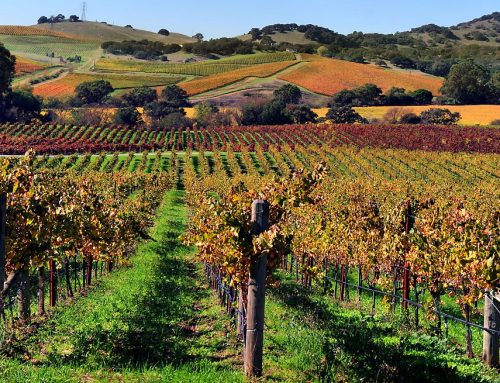
He had been an aristocrat, a soldier left for dead on a battlefield, a coal miner and a refugee before he ever made a great wine. Yet André Tchelistcheff, a small, courtly Russian émigré, did more than almost anyone to turn California into a wine power — and to train the generation of winemakers who conquered the world1.
Quick facts
- André Tchelistcheff (1901–1994) fled the Russian Revolution.
- In 1938 he became winemaker at Beaulieu Vineyard in Napa.
- He coined the term “Rutherford dust” for great Napa Cabernet.
- He mentored the winemakers who won the 1976 Judgment of Paris.
From the White Army to Napa
Tchelistcheff was born in 1901 into a Russian noble family. The Revolution swept it all away: he fought as a young officer in the White Army, was wounded and left for dead on a Crimean battlefield, and survived to a hard exile — labouring in a Bulgarian coal mine before rebuilding himself through study, training as an agronomist in Czechoslovakia and then in viticulture and oenology in France2.
It was in Paris in 1938 that the Napa pioneer Georges de Latour found him and brought him across the world to make wine at Beaulieu Vineyard in Rutherford. Tchelistcheff would stay for thirty-five years2.
Remaking Napa

American wine was still recovering from Prohibition, and much of it was crude. Tchelistcheff brought European rigour: cold fermentation, control of the softening malolactic fermentation, scrupulous cellar hygiene, French oak ageing, and frost protection in the vineyard. His Beaulieu “Georges de Latour Private Reserve” Cabernet became the American benchmark, and he taught that the greatest reds came from one patch of Napa in particular3.
It takes Rutherford dust to grow great Cabernet.— André Tchelistcheff3
The maestro’s students
If his wines were his art, his students were his legacy. Over decades at Beaulieu and as a freelance consultant to more than thirty wineries across the West, Tchelistcheff mentored a whole generation4. Two of his protégés — Warren Winiarski of Stag’s Leap Wine Cellars and Mike Grgich of Chateau Montelena — made the very wines that beat France at the 1976 Judgment of Paris. Little wonder he is remembered as the “dean of American winemakers”5.
An immigrant’s legacy
Tchelistcheff’s story is, at heart, an immigrant’s story — one of the many newcomers who built American wine. A Russian who lost everything gave California its confidence and its craft, and when he died in 1994 the modern American wine industry bore his fingerprints from Napa to Washington State. The refugee had become a founding father.
Frequently asked questions
More from this day in wine history
See everything else that happened on December 7 — who was born, what was bottled, and which laws were signed.
Read more
References
- Beaulieu Vineyard — André Tchelistcheff: The Maestro. ↑
- Russia Beyond — How a Winemaker from Russia Made Californian Wine World-Famous. ↑
- Wine with Seth (WineWiki) — André Tchelistcheff. ↑
- University of Nebraska Press — Maestro: André Tchelistcheff and the Rebirth of Napa Valley. ↑
- The Wine Stalker — Heroes of Wine: André Tchelistcheff (1901–1994). ↑
Recommended reading


As an Amazon Associate, This Day in Wine History earns from qualifying purchases. Book recommendations are chosen independently.
Share This Story, Choose Your Platform!
Related Posts