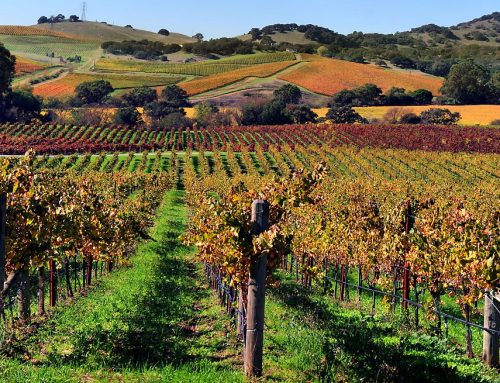
Aglianico is the great red grape of southern Italy — so noble, tannic and long-lived that its finest wine is called the “Barolo of the South.” Grown on the volcanic soils of Campania and Basilicata since the days of the ancient Greeks, it was long dismissed as rustic country wine. Today it is recognised as one of Italy’s truly great reds1.
Quick facts
- Aglianico is the noble red of Campania and Basilicata in southern Italy.
- Its top wines are Taurasi and Aglianico del Vulture, grown on volcanic soil.
- Firm and age-worthy, it is nicknamed the “Barolo of the South.”
The Barolo of the South

Just as Nebbiolo makes the mighty Barolo in the north, Aglianico makes southern Italy’s most powerful reds — deep, firm, savoury wines with formidable tannin and the structure to age for decades. Taurasi, its greatest expression, has earned the nickname the “Barolo of the South,” a wine that can stand comparison with Italy’s most celebrated bottles1.
A Greek inheritance
The grape’s roots run to antiquity. Aglianico was grown in Campania and Basilicata more than two thousand years ago, when southern Italy was Magna Graecia, a land of Greek colonies — and its very name is often read as a corruption of Ellenico, “Hellenic,” the Italian for Greek. Modern DNA studies are sceptical of a direct Greek parentage, but the ancient link is woven into Aglianico’s identity2.
Fire in the soil
Aglianico loves volcanoes. Its two heartlands sit on volcanic soils — the slopes of the extinct volcano Monte Vulture in Basilicata, and the volcanic hills of Campania — which lend the wines minerality and grip. It is also stubbornly late-ripening, often not picked until late October or November, drinking in every last hour of southern sun3.
Born of ancient volcanoes and the Mediterranean sun, Aglianico ripens only when almost everything else is picked.— on Aglianico’s late harvest3
Taurasi and Vulture
Two names crown the grape. In Campania, Taurasi is the historic king, granted Italy’s top DOCG rank; in Basilicata, Aglianico del Vulture is the region’s pride, grown high on the volcano’s flanks. Both turn Aglianico’s ferocious youth into something profound, and both reward long cellaring4.
Built to age
Young Aglianico can be austere, even forbidding — all dark cherry, tar and iron-hard tannin, wrapped in bracing acidity. But that is the secret of its greatness. Given years in barrel and bottle, it softens and unfurls into a complex, savoury wine of leather, dried fruit and smoke, among the longest-lived reds in all of Italy5.
The south rediscovered
For much of the twentieth century Aglianico languished, its wines sold cheaply or shipped north to beef up blends. The rediscovery of southern Italy changed that: a new generation of growers championed the grape, and Taurasi and Vulture are now spoken of alongside Barolo and Brunello. The old Greek vine has finally taken its place among Italy’s aristocrats6.
Frequently asked questions
More from this day in wine history
See everything else that happened on November 5 — who was born, what was bottled, and which laws were signed.
Read more
References
- Wine-Searcher — Aglianico. www.wine-searcher.com ↩
- Berry Bros. & Rudd — Aglianico. www.bbr.com ↩
- Encyclopaedia Britannica — Campania. www.britannica.com ↩
- Fine Taste — Everything You Need to Know About Aglianico. www.finetaste.it ↩
- Hedonistic Hiking — Aglianico: An Ancient Grape. www.hedonistichiking.com ↩
- Taste and Terroir — The Aglianico Grape. tasteandterroir.com ↩
Recommended reading

Hugh Johnson
Places Aglianico and southern Italy in the sweep of wine history.

As an Amazon Associate, This Day in Wine History earns from qualifying purchases. Book recommendations are chosen independently.
Share This Story, Choose Your Platform!
Related Posts